In most industrial environments, a split-second lapse in equipment control can lead to amputations, electrocution, or worse. That’s where lockout tagout locks and keys come in—not as mere accessories, but as critical, life-saving components of an energy control program. These devices physically prevent unauthorized or accidental re-energization of machinery during maintenance, ensuring workers stay safe and companies stay compliant.
Despite decades of regulation, lockout tagout (LOTO) failures still account for a significant number of workplace incidents. OSHA estimates that proper LOTO procedures prevent nearly 120 fatalities and 50,000 injuries every year in the U.S. alone. Yet, common oversights—like using generic padlocks or skipping key control—undermine even the best-written safety plans.
This guide cuts through the noise. You'll learn the real-world function of LOTO locks and keys, explore top options, and discover how small procedural details make a massive safety difference.
What Are Lockout Tagout Locks and Keys?
Lockout tagout locks and keys are part of a broader energy isolation strategy designed to protect technicians working on machinery. The "lockout" component involves using physical locks—often padlocks—to secure energy-isolating devices such as circuit breakers, valves, or disconnect switches. The "tagout" portion uses durable tags to communicate why the lock exists, who applied it, and when.
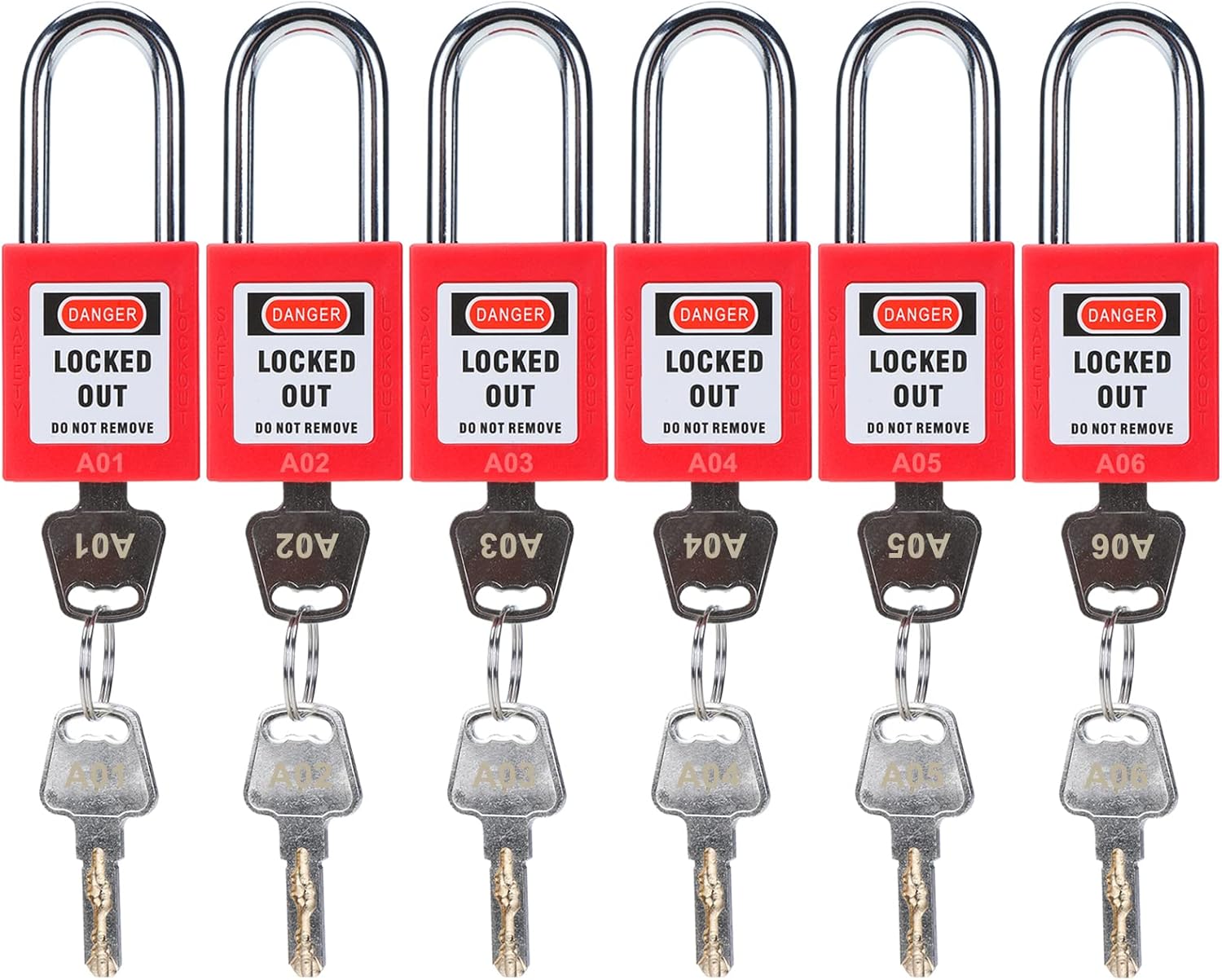
Keys are just as vital. They control access, ensuring only authorized personnel can remove locks. In many facilities, master-keyed or keyed-alike systems create risk because one lost key compromises the entire system. The best setups use individually keyed locks, where each worker has a unique key—no duplicates.
For example, in a paper mill, a mechanic repairing a pulper must lock out the main power disconnect and hydraulic valve. Using a personal LOTO lock, they secure both points and attach a tag stating their name, department, and expected completion time. Only they—or a verified relief worker under strict protocol—can remove that lock with their specific key.
Why Standard Locks Don’t Work for LOTO
A standard hardware-store padlock may look similar to a LOTO lock, but it lacks critical design features. Generic locks often have steel shackles vulnerable to bolt cutters, lack high-visibility coloring, and don’t support standardized lockout hasps or valve covers.
LOTO-specific locks are built for safety, not convenience. Key traits include:
- Non-conductive materials (e.g., nylon or polycarbonate shackles) to prevent electrical conductivity
- Unique keying to eliminate cross-access
- Weather resistance for outdoor or washdown environments
- High-visibility colors like red, yellow, or orange to signal danger
Consider a case in a food processing plant where a stainless-steel padlock was used in a high-moisture area. Over time, the lock corroded, making it difficult to remove—delaying production and risking forced removal, which violates OSHA standards. A properly rated LOTO lock made from non-corrosive polymer would have avoided the issue entirely.
Types of Lockout Devices and Their Key Systems
Not all LOTO locks serve the same purpose. The right choice depends on equipment type, energy source, and team structure. Here’s a breakdown of common lock types and their compatible key systems:
#### 1. Personal Safety Padlocks Used by individual workers during maintenance. Typically feature a single key per lock, color-coded by department or hazard type.

#### 2. Group Lockout Hasps Allow multiple workers to apply their personal locks to a single isolation point. The hasp doesn’t need a key—each worker uses their own lock.
#### 3. Valve Lockouts Secure gate, ball, or butterfly valves. Often use a universal shackle or custom clamp design. Keys match the worker’s personal lock.
#### 4. Circuit Breaker Lockouts Slide over breaker toggles to prevent flipping. Most accept standard LOTO padlocks with 7–8mm shackles.
#### 5. Plug and Cord Locks Prevent electrical connectors from being reinserted. Use a locking sleeve secured by a padlock.
Key systems vary:
- Keyed Alike (KA): All locks open with the same key. Risky—common in older facilities.
- Keyed Different (KD): Each lock has a unique key. Best for accountability.
- Master Keyed (MK): Individual keys plus one master key for supervisors. Requires strict access logs.
A manufacturing plant in Ohio reduced unauthorized lock removal by 90% after switching from KA to KD locks and implementing a key logbook.
How Lock and Key Management Prevents Accidents
The lock is only half the system. Poor key management is a silent failure point in many LOTO programs.
Imagine a maintenance supervisor who keeps a master key in their desk drawer. A junior technician, unaware a machine is under repair, uses the key to bypass a lock and restarts a conveyor. The technician working inside the system is seriously injured.
To prevent this, effective key management includes:
- Personal accountability: Each worker is issued one lock and one key.
- Lockout stations: Centralized boards where locks, tags, and keys are stored.
- Key control logs: Track who has which key and when it was issued.
- Lost key protocols: Immediate lock replacement and rekeying across the system.
Some advanced systems use electronic key management—like digital lockers with PIN access and audit trails. While not required, they reduce human error in high-turnover environments.
Top 5 Lockout Tagout Locks and Key Systems
Choosing the right LOTO equipment means balancing durability, compliance, and usability. These five options are widely trusted in industry:
| Brand | Model | Key Features | Best For |
|---|---|---|---|
| Master Lock | 14XDLF | Non-conductive shackle, 7.5mm diameter, KD/KA options | General industrial use |
| Grainger | WHITNEY 5300 | High-strength polymer body, corrosion-resistant | Food processing, washdown areas |
| Safelok | SLK-PAD-RED | Individually serialized, OSHA-compliant tags included | High-accountability teams |
| RS Pro | 315-988 | Compact design, ideal for breaker lockouts | Electrical panels, tight spaces |
| Bernard | 500 Series | Full nylon body, 8mm shackle, UV resistant | Outdoor, chemical plants |
Each of these supports strict key control and integrates with standard LOTO kits. For most facilities, investing in individually keyed models pays off in reduced incident risk and audit readiness.
Common Mistakes
with LOTO Locks and Keys
Even experienced teams make preventable errors. These are the most frequent—and dangerous—mistakes:
- Using personal locks for non-LOTO tasks: A worker uses their red safety lock to secure a tool cabinet. Later, during lockout, someone sees the lock and assumes it’s not part of LOTO—leading to accidental re-energization.
- Sharing keys: Two mechanics share one lock and key to save time. This breaks the “one worker, one lock” rule and voids personal accountability.
- Skipping the tag: The lock is applied, but no tag explains why. Other workers don’t know who to contact or when it’s safe to remove.
- Using damaged or rusty locks: Compromised locks may not release properly or could fail under stress.
- No lockout station: Locks and tags are stored haphazardly, leading to lost items or non-compliance.
A refinery in Texas traced a near-miss incident to a shared lock. The repair team assumed the machine was clear because only one lock was visible—unaware a second worker had used a shared key. The result? A full procedural overhaul and mandatory retraining.
Integrating Locks and Keys into Your LOTO Program
A LOTO program isn’t just about buying locks. It’s a full workflow: training, application, verification, and removal.
Here’s how to integrate locks and keys effectively:
- Conduct an energy control audit. Identify every machine and its energy sources (electrical, pneumatic, hydraulic, etc.).
- Standardize your locks. Choose one color scheme (e.g., red for electrical, yellow for mechanical) and key type (KD recommended).
- Train every authorized employee. OSHA requires annual training, but high-risk sites should train quarterly.
- Use lockout stations. Place them near high-activity zones with all necessary devices—locks, tags, hasps, keys.
- Enforce the “one person, one lock” rule. No exceptions.
- Audit monthly. Randomly inspect lockouts to ensure compliance.
A beverage plant in California cut LOTO violations by 70% within six months by introducing standardized red/yellow locks and holding monthly safety walkthroughs with supervisors.
The Bottom Line: Safety Starts
with the Right Lock and Key
Lockout tagout locks and keys are more than hardware—they’re symbols of accountability. When a technician applies their personal lock, they’re not just securing a valve or breaker; they’re asserting control over their safety.
Compliance isn’t about checking boxes. It’s about ensuring that every lock has a purpose, every key has an owner, and every tag tells a story. The best LOTO systems are simple, standardized, and unforgiving of shortcuts.
Start by auditing your current locks and keys. Replace generic or damaged units. Enforce unique keying. Train your team not just on how to lock out—but why it matters.
Because in safety, the smallest device can make the biggest difference.
FAQ
Can I use any padlock for lockout tagout? No. Only locks designed for LOTO—such as those with non-conductive shackles and standardized shackle diameters—should be used. Generic locks don’t meet OSHA requirements.
How many locks can be on one machine? As many as needed. Each authorized worker must apply their own personal lock during servicing.
What happens if a LOTO key is lost? The lock must be removed by a supervisor using a documented procedure, often involving forceful removal. The system should then be rekeyed to prevent future risk.
Should LOTO locks be red? While not mandatory, red is the industry standard for high-visibility and hazard recognition. Other colors can be used for categorization (e.g., yellow for mechanical).
Can a tag be used without a lock? Only in rare cases where energy isolation can’t be physically locked. Tagout-only requires additional safety measures and is less protective than lockout.
Who can remove a LOTO lock? Only the worker who applied it, or a supervisor following a formal removal procedure if the worker is unavailable.
Do LOTO locks expire? They don’t expire, but must be inspected regularly. Damaged, corroded, or malfunctioning locks should be retired immediately.
FAQ
What should you look for in Lockout Tagout Locks and Keys: Your Safety Essentials? Focus on relevance, practical value, and how well the solution matches real user intent.
Is Lockout Tagout Locks and Keys: Your Safety Essentials suitable for beginners? That depends on the workflow, but a clear step-by-step approach usually makes it easier to start.
How do you compare options around Lockout Tagout Locks and Keys: Your Safety Essentials? Compare features, trust signals, limitations, pricing, and ease of implementation.
What mistakes should you avoid? Avoid generic choices, weak validation, and decisions based only on marketing claims.
What is the next best step? Shortlist the most relevant options, validate them quickly, and refine from real-world results.